Developers & investorsEN · NL · DE · ESContact
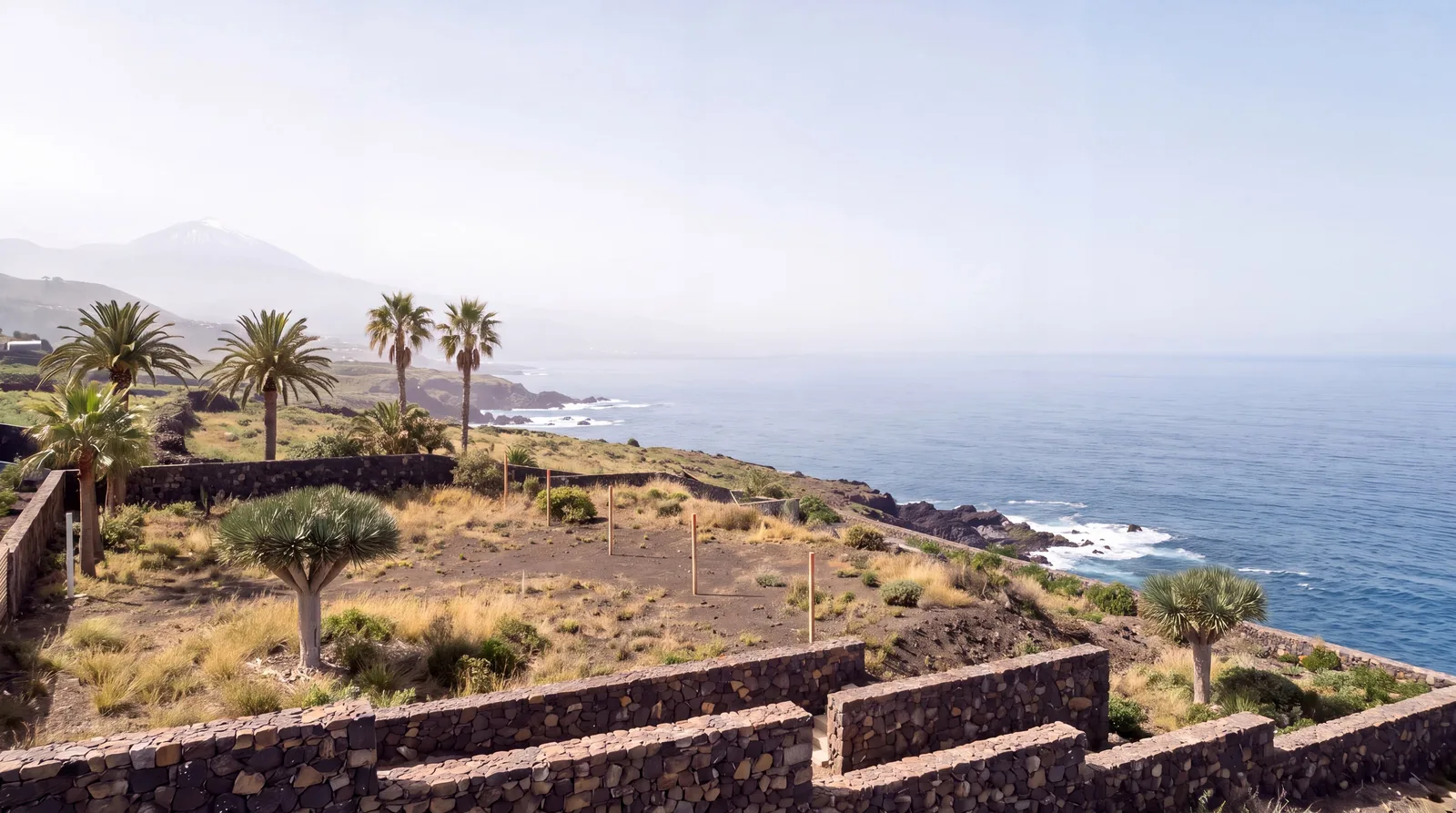
Terraced plot above the Atlantic coast with dry grass, dragon trees, palms and dark volcanic stone walls.
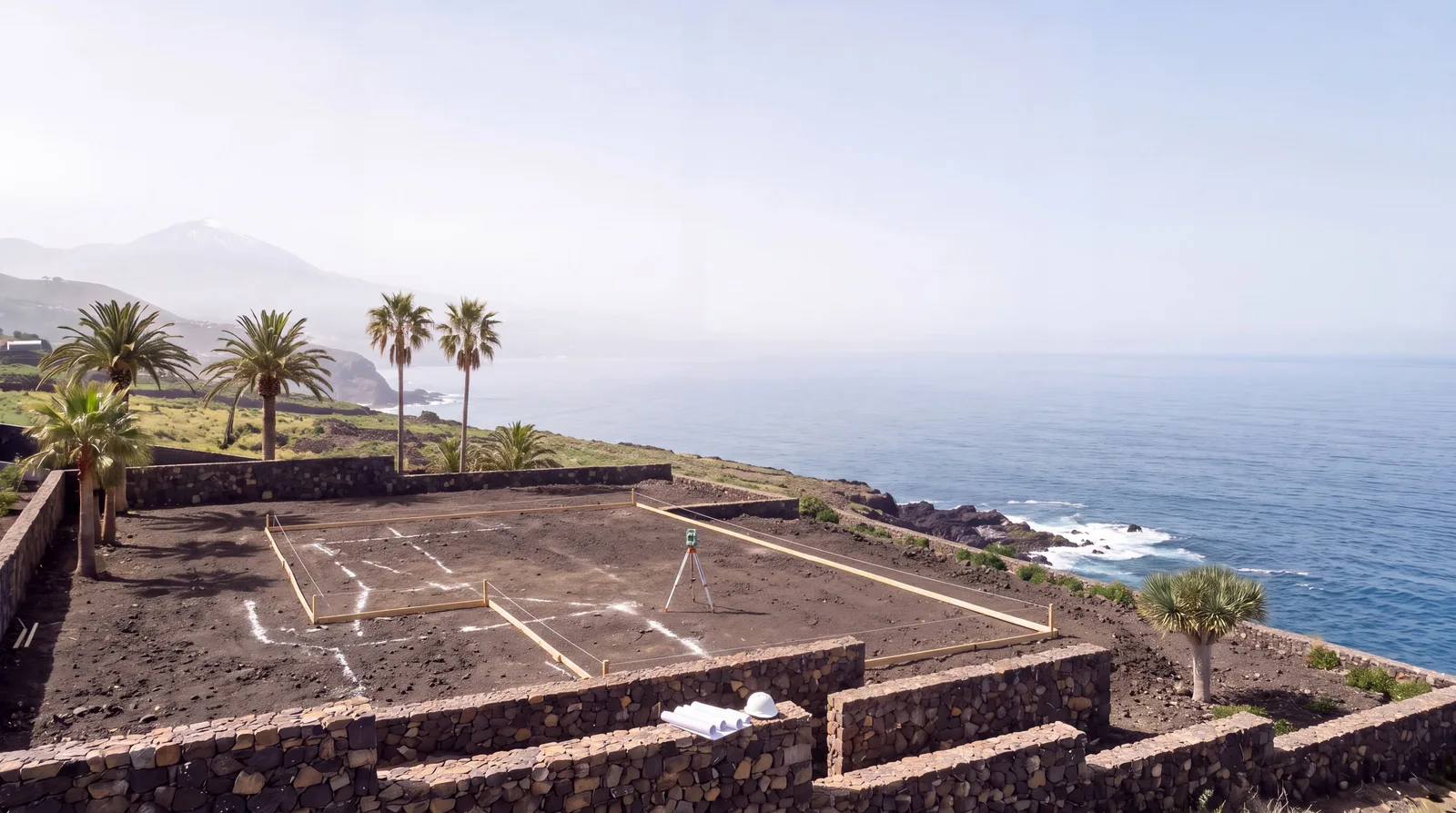
Foundation outline of a house plot on a dark volcanic site, with a surveyor's tripod and string lines, palm trees and the sea beyond.
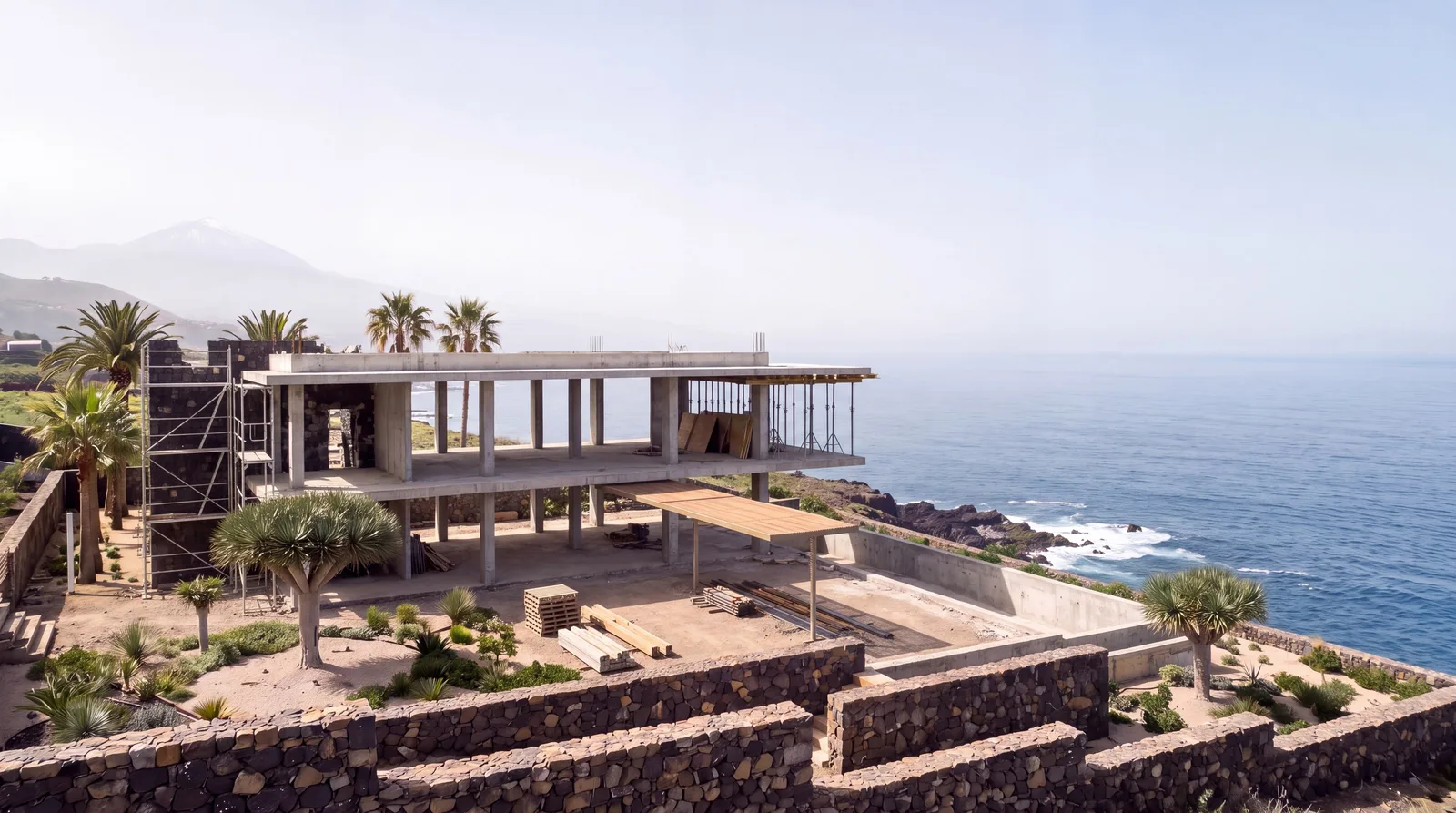
Unfinished concrete house on a clifftop, with the Atlantic beyond stone terraces.
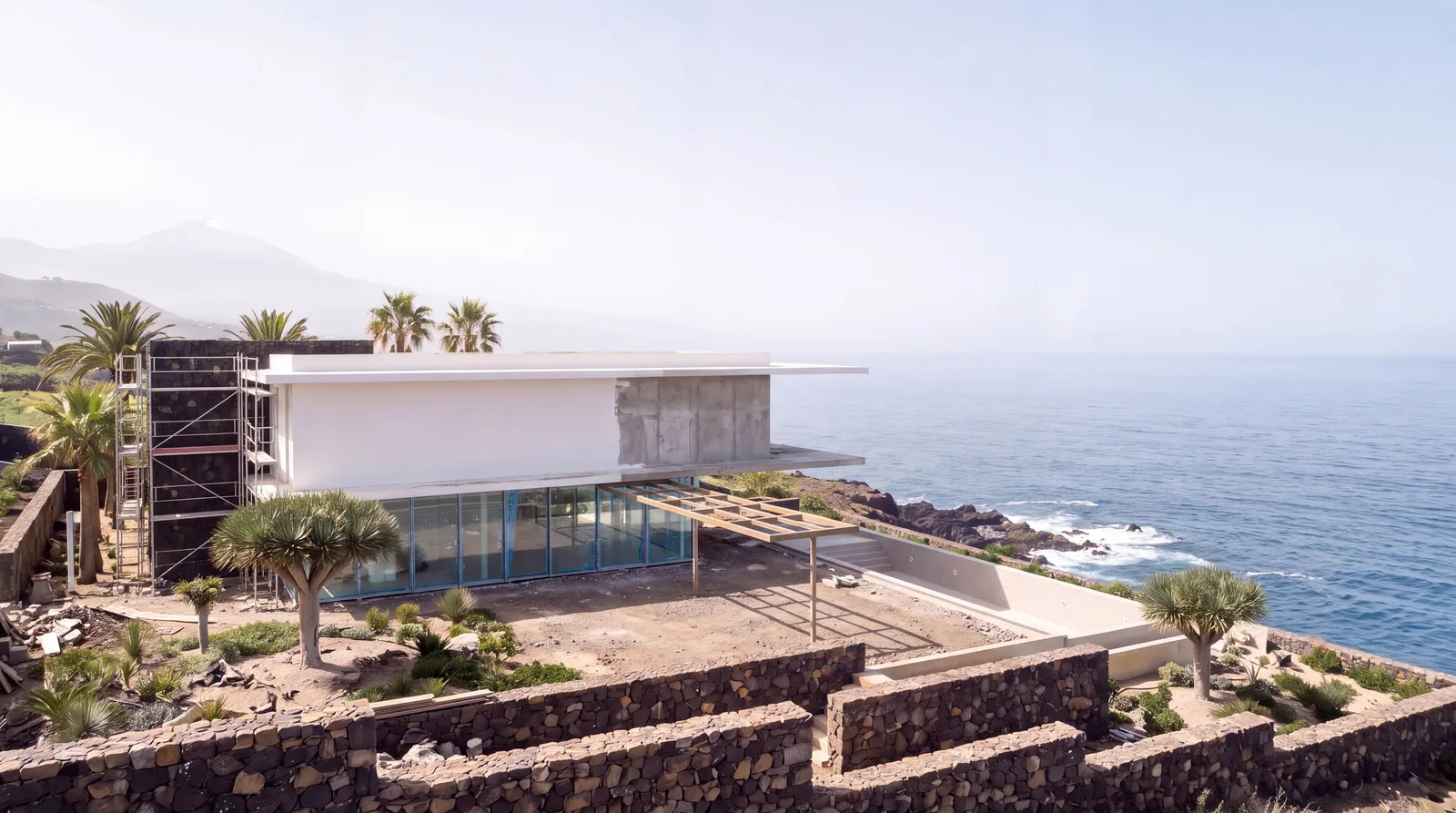
Single-storey white villa with a glass-walled living room, a timber pergola and a dry-stone terrace overlooking the Atlantic coast.
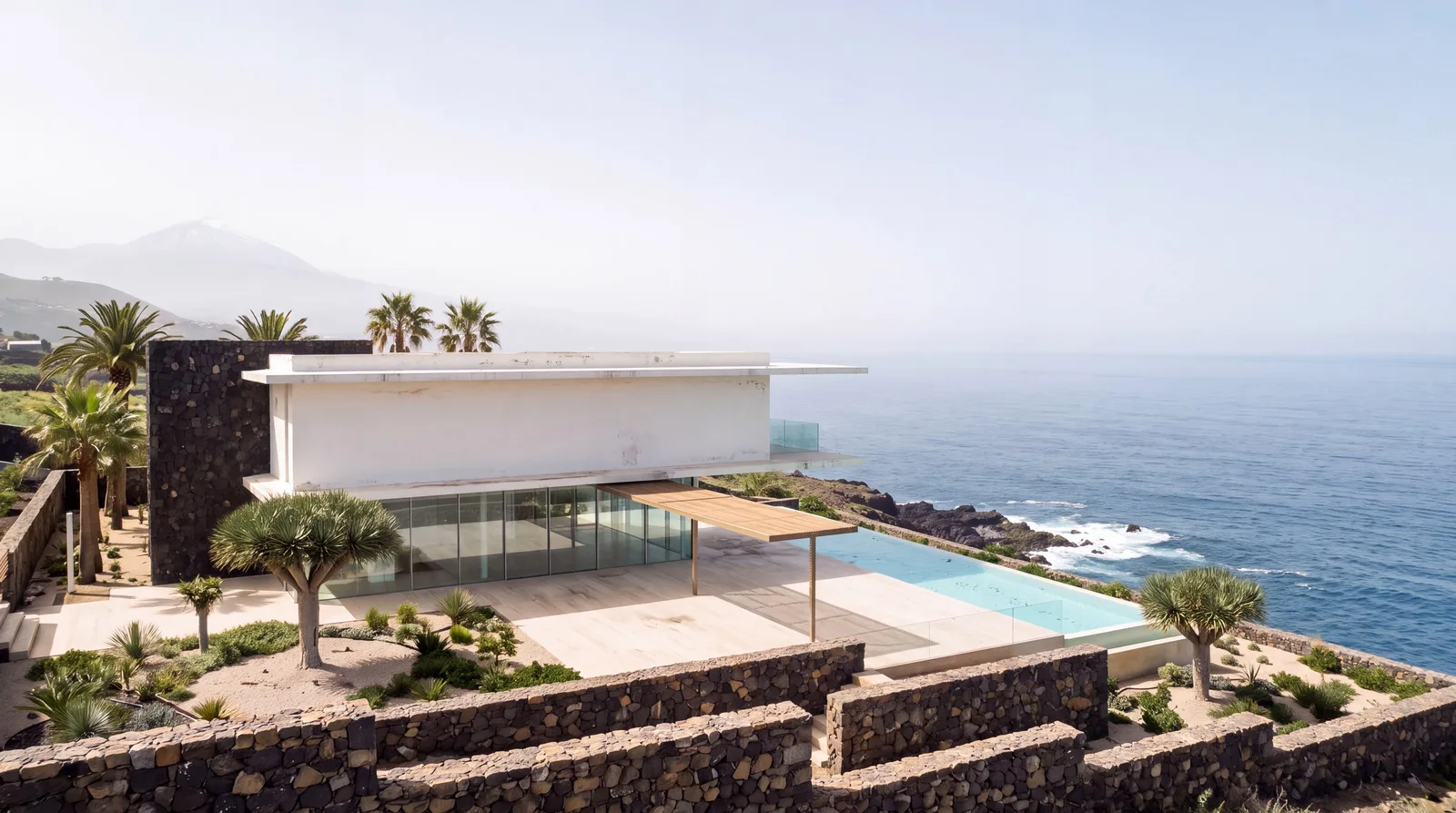
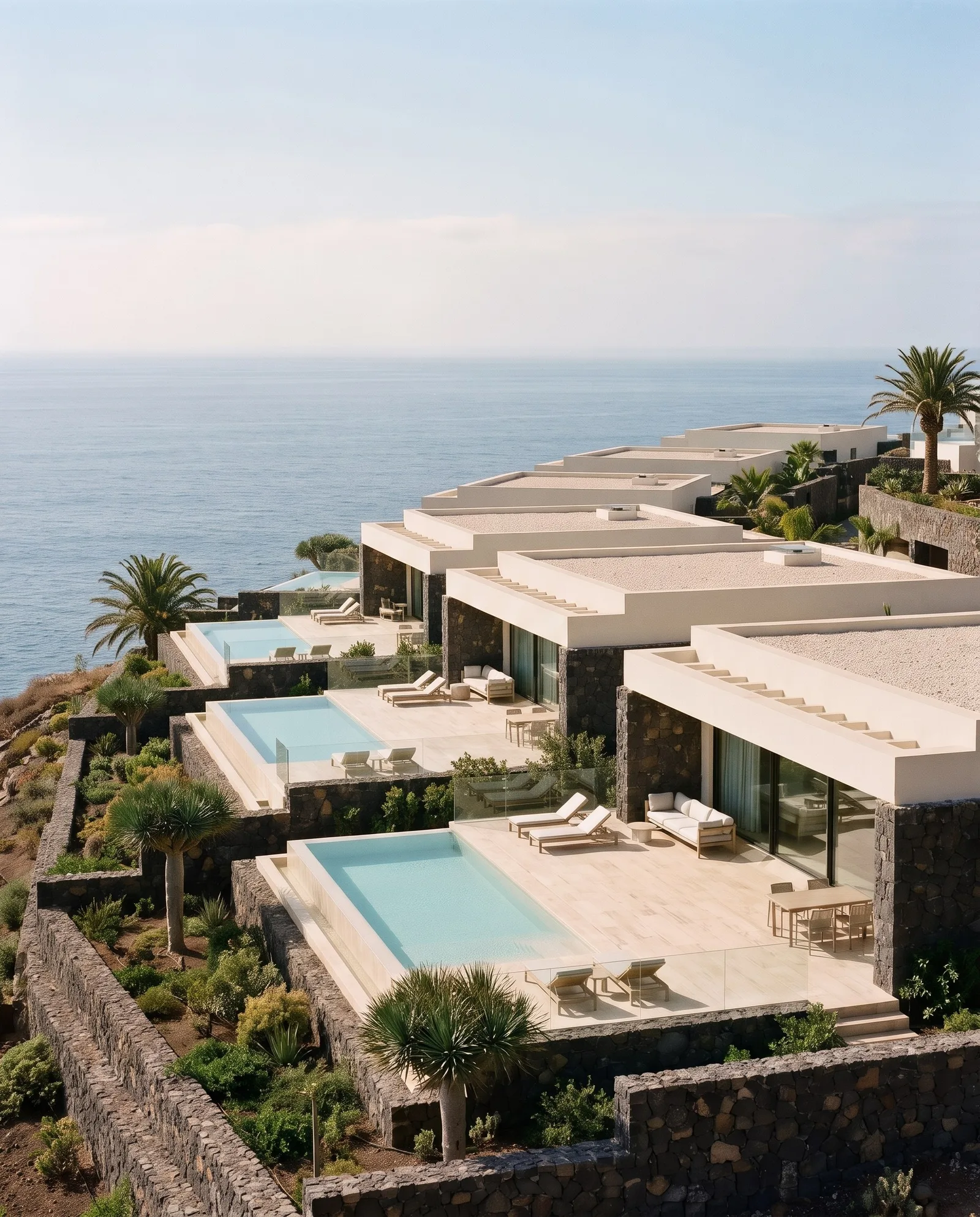
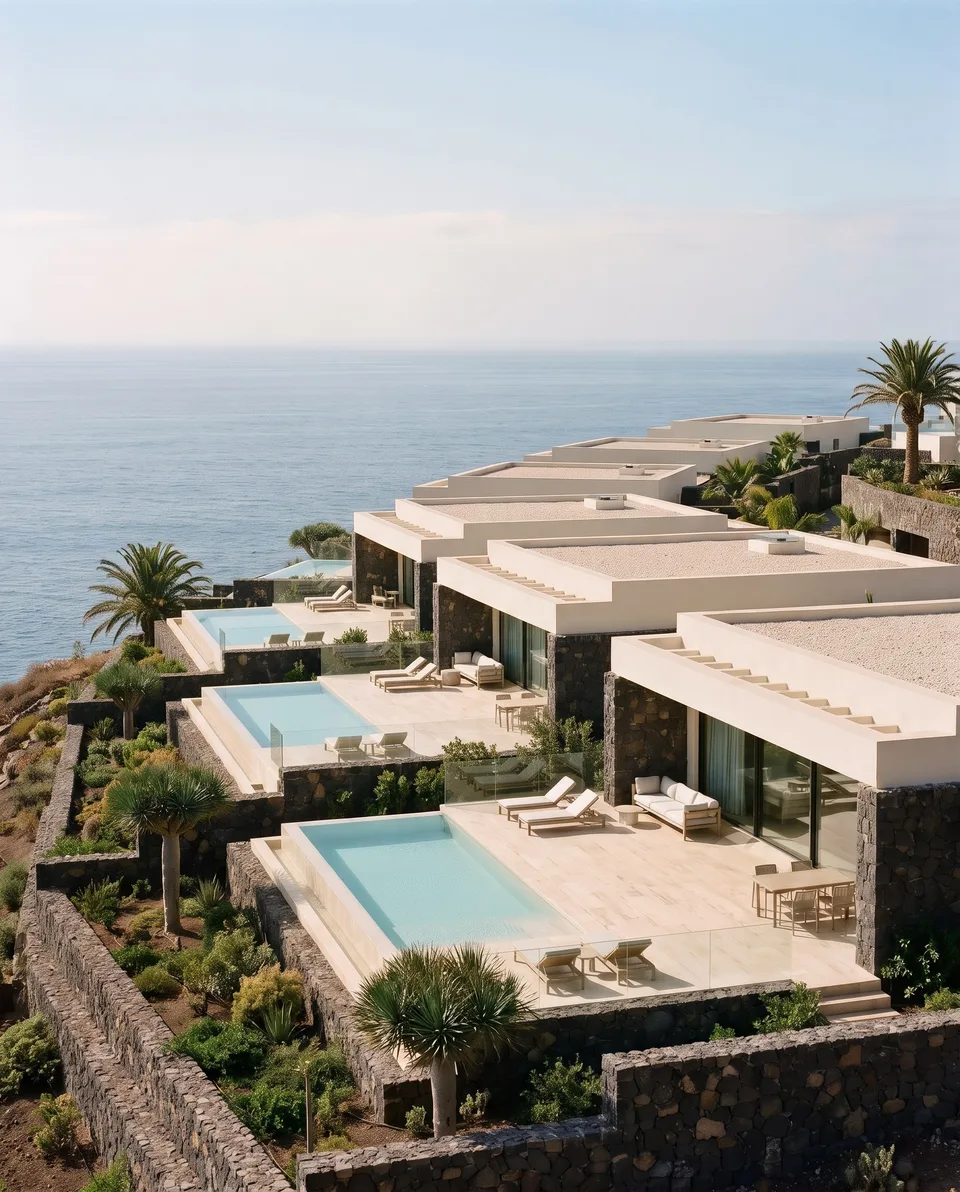
White single-storey villa with glass walls and an infinity pool overlooking the Atlantic, framed by dark volcanic stone terraces and dragon trees.
Home · Build

Build fromscratch

New homes on Tenerife go wrong in the same four places: the plot, the licence, the contract and the money. We check all four before you commit to building. Then we build by rules that keep it on track.

Download the guide (PDF) ↓
2–3 yearsfrom first study to keys, realistically. The building licence is the biggest variable.
¾Only about three quarters of what you'll really spend is the builder's price. The rest is where budgets break.
€0paid to a builder before your licence is granted. No exceptions.

The stories you've heard

What goes wrong

They're usually true, and they're almost always one of these nine. For each one: why it happens on Tenerife, and the check that stops it.

The plot can't carry the house

Land that looks buildable often isn't. It may be rural land, a protected zone, too close to a road, a ravine or the coast, under the height limits around Tenerife North airport, or inside a historic centre with its own rules. Listings rarely mention any of it.

Our check

Before you sign anything binding, we get the planning status from the town hall and an architect works out what can legally be built: how many square metres, how high, and how close to each boundary.

The licence takes forever

The law gives a town hall three months. Santa Cruz now takes three to five. Tenerife's architects' college reports files stuck for three to four years in some towns.

Our check

A licence forecast for your town, a complete file the first time, and the faster report route where the town allows it. No building money moves until the licence is granted.

The budget runs away

A vague specification, rock or cavities in volcanic ground, a steeper slope than expected, changes halfway through, and costs nobody mentioned: fees, taxes, insurance, connections.

Our check

A ground survey before the final design, a full specification with measured quantities, a fixed price for that scope, and a 10% contingency that stays in your own account.

The builder disappears

It happens when the money runs ahead of the work: large advances, payments for "materials on order", nothing held back. When a builder goes bust, the owner is left with a half-built house and a paid invoice.

Our check

You only pay for work that's done and certified by the site architect. 5% is held back for twelve months. Any advance must be covered by a bank guarantee.

Nobody tells you anything

You live abroad. The site stops, a decision waits for you, and you hear about it a month later.

Our check

One contact in your language, a weekly report with photos and the budget status, and a video walk-through of the site whenever you ask.

The new house is damp

The north is green for a reason: trade-wind cloud, humidity and driving rain. A house designed like one in the south gets condensation and mould within a few winters.

Our check

Designed for the north from the first sketch: ventilation, thermally broken windows, proper waterproofing and vapour control. It adds 5–10% to the build cost, and that's in the budget from day one.

No water, no power, no drains

Most of Tenerife's water comes from galleries and wells run by private water communities. Power connections take time. Many rural plots have no sewer, so the house needs its own treatment system and a discharge permit from the island's water council.

Our check

Every service is confirmed in the plot study. Connections and permits are applied for with the licence, not at the end of the build.

It's finished, but not legal

Without the final certificate and the first-occupation papers, you can't get permanent utility contracts or register the house. Some owners wait months to move in to a finished home.

Our check

Legal completion is part of the job: final certificate, first occupation, new-build deed, land registry and cadastre. The builder's last payment depends on it.

The papers don't match the land

On the islands the land registry, the cadastre and the fence often disagree about the size and the boundaries of a plot. You find out when the architect measures it.

Our check

A topographic survey and a registry–cadastre comparison before you buy, with any correction arranged before the design is drawn.

The plot study

Know before you buy

Three to four weeks of real work on the plot you're considering. At the end you get a clear go, go with conditions, or no-go, with every number behind it.

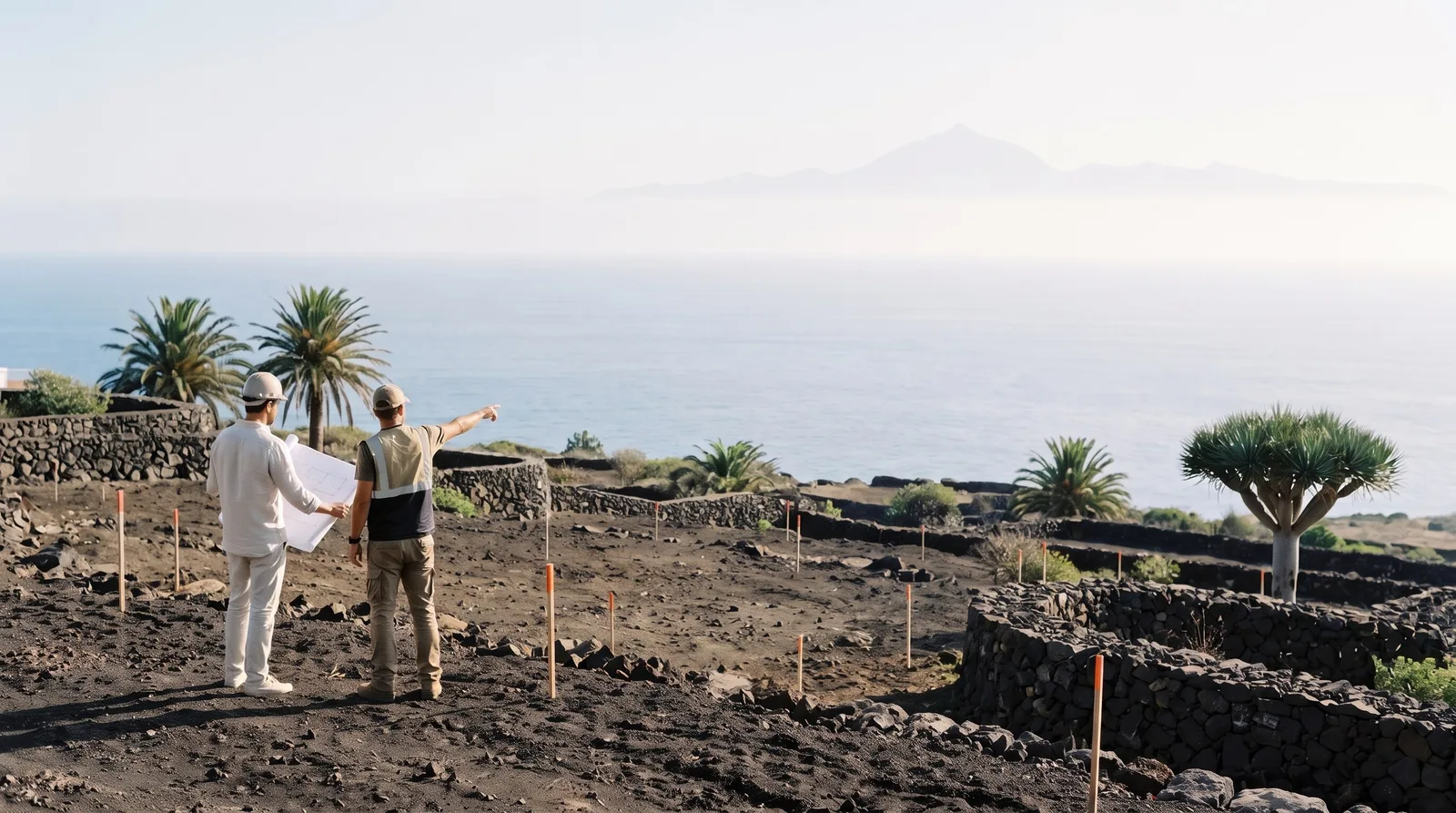
Two men in helmets study a plan on a dark volcanic plot above the sea, with terraced stone walls and a dragon tree.

It isn't free because it's real work: an architect and a builder on site, requests to the town hall and the land registry, and a budget built from your plot, not from a brochure. Free checks tend to end with the answer the seller wants.

  • OwnershipLand registry extract, charges, easements and boundaries, compared with the cadastre.
  • PlanningZoning and the rules that apply: buildable m², height, footprint, setbacks and protections.
  • ConstraintsRoads, ravines, the coast, airport height limits and heritage zones, and which other authorities must approve.
  • Site visitWith the architect and the builder: access for machines, slope, rock, drainage, sun, wind and views.
  • GroundWhat the geotechnical survey has to answer, and whether retaining walls are likely.
  • ServicesWater, electricity, sewer or a treatment system: what exists, what it costs, who decides.
  • What fitsA massing sketch showing the house the plot can take, and where it sits best.
  • BudgetA range for your size and quality, with every fee, tax and connection, plus a contingency.
  • TimeA realistic plan from design to keys, with a licence forecast for that town.
  • RisksA red, amber and green list: each risk with how to solve it and what that costs.
  • The purchaseConditions to put in the deposit contract, with your lawyer, so you can walk away if a check fails.
  • The reportWritten in your language, followed by a one-hour call to go through it together.
Six stages, six gates

Nothing moves until it's safe

Each stage ends with a gate: a written check that has to pass before money moves to the next one.

  1. Foundation outline of a house plot on a dark volcanic site, with a surveyor's tripod and string lines, palm trees and the sea beyond.
    01

    Study

    3–4 weeks

    The plot study: ownership, planning, ground, services, budget and time.

    GateGo, go with conditions, or no-go, in writing.

  2. Terraced plot above the Atlantic coast with dry grass, dragon trees, palms and dark volcanic stone walls.
    02

    Plot

    1–3 months

    Deposit contract with conditions, then the purchase at the notary, with your lawyer.

    GateClean title and every condition met before the final payment for the land.

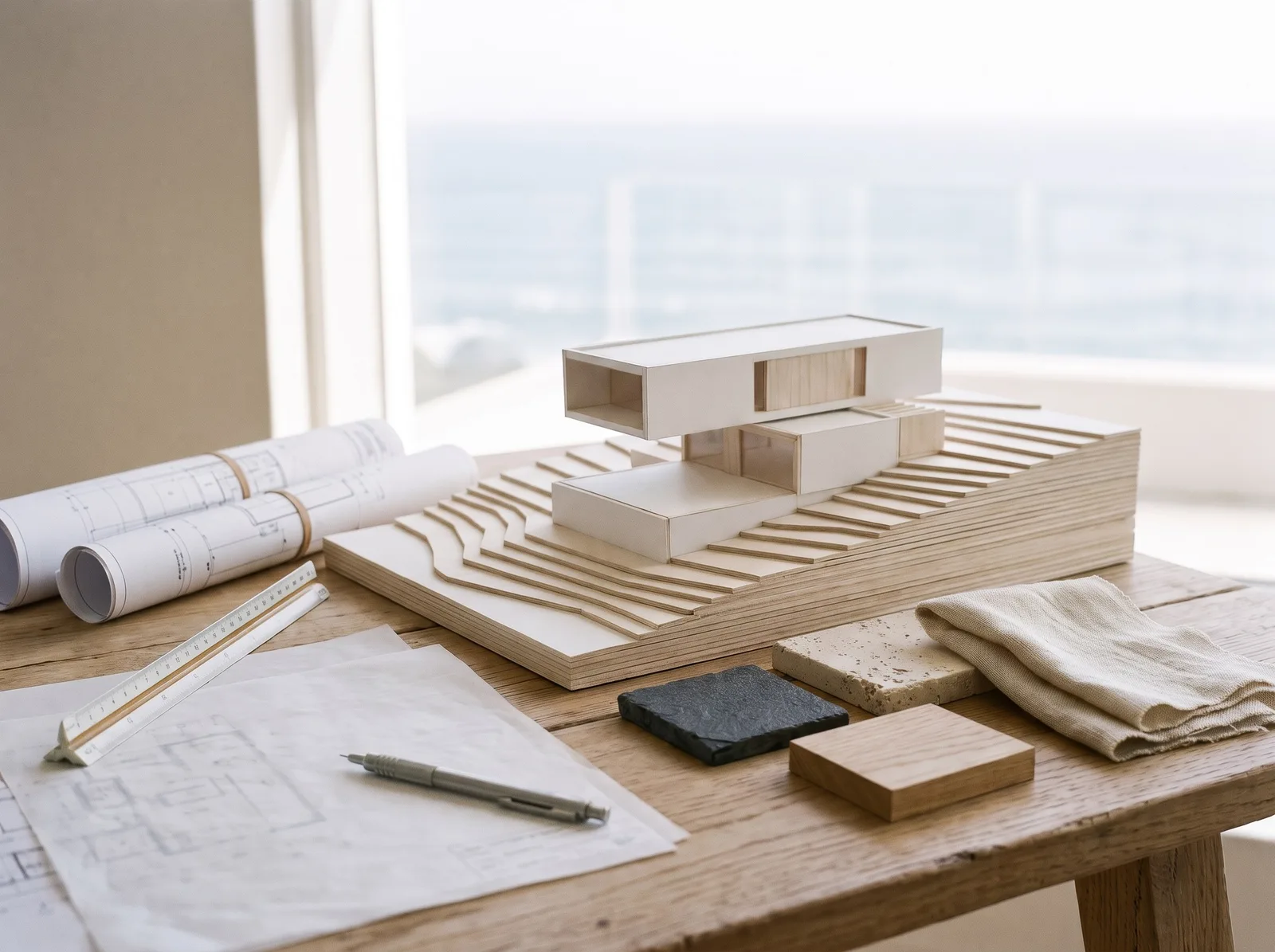
  3. Architectural model on a wooden table with rolled plans, samples and a sea view.
    03

    Design

    2–5 months

    Sketch, basic project and execution project, with the full specification and measured quantities.

    GateA fixed build price within the ceiling you set, signed by you.

  4. A wooden desk by a sea-view window holds open plans, a pen and coffee.
    04

    Licence

    3 months to over a year

    The file goes in complete. Connections and other permits are applied for at the same time.

    GateLicence granted. No building money before this point.

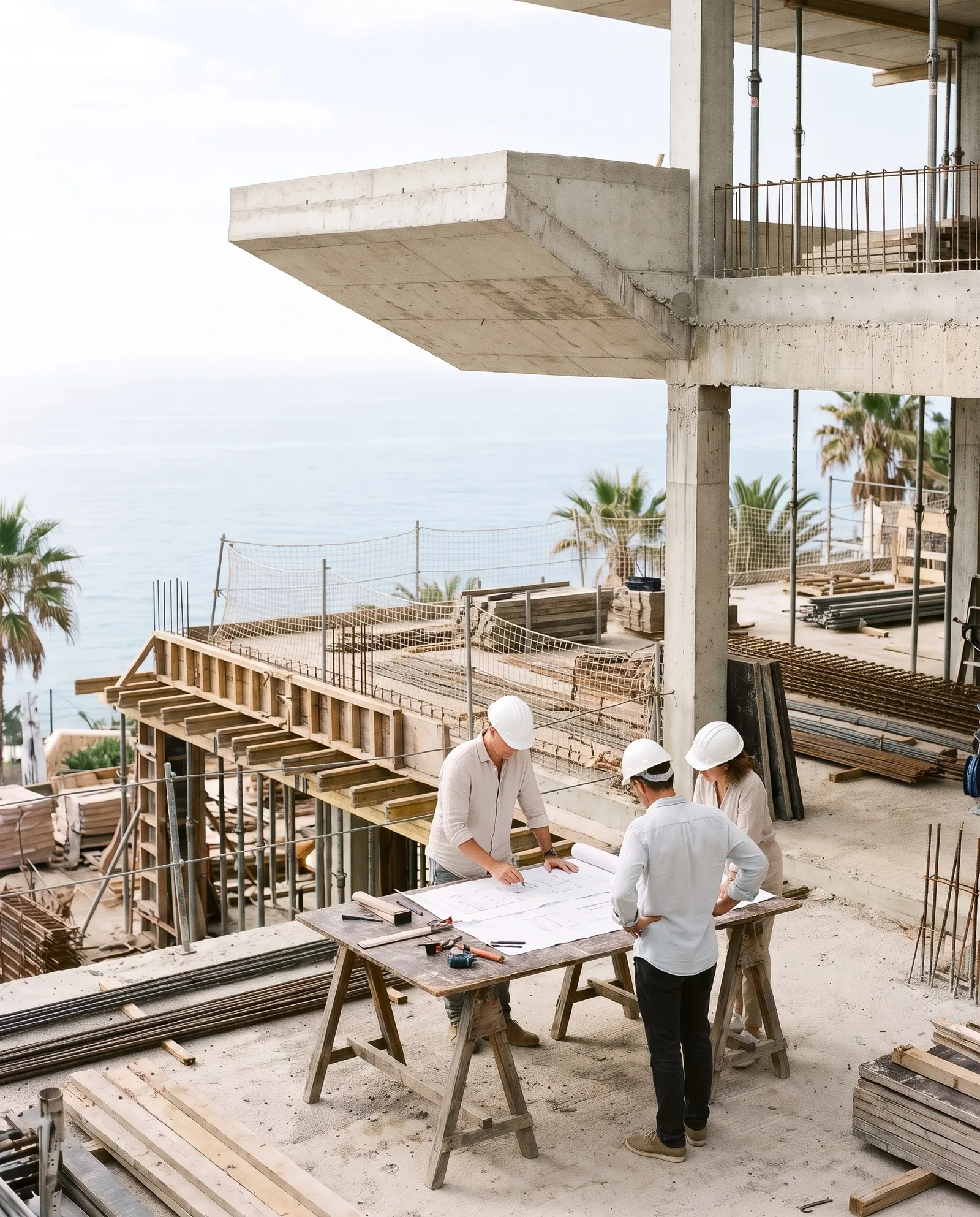
  5. Unfinished concrete house on a clifftop, with the Atlantic beyond stone terraces.
    05

    Build

    10–18 months

    Weekly reports, monthly certificates, and independent checks before anything is covered up.

    GateEvery payment certified by the site architect. Inspections at foundations, structure, waterproofing and installations.

  6. White single-storey villa with glass walls and an infinity pool overlooking the Atlantic, framed by dark volcanic stone terraces and dragon trees.
    06

    Keys

    2–4 months

    Snag list, final certificate, first occupation, new-build deed, registry and utilities in your name.

    GateThe house is legal before the builder's last payment. The 5% retention is released after twelve months.

Licence forecast

How long the licence takes

The building licence is the biggest variable in a project, and it depends almost entirely on the town hall. Pick the town to see what we expect there.

Typical case

12–24 months

Hard case

24–36+ months

Historic centre, and areas the new supplementary plan changes. Its approval could bring typical cases down to 9–15 months.

How sure we areMedium-low

Typical case: an urban plot, a project that complies with the plan and a complete file, for a new house or a major renovation, counted from filing to grant. Every request for corrections (requerimiento) stops the clock: add 1–3 months if the town hall asks for changes.

Before filing, commissioning and drafting the project and getting the college’s visado usually take another 2–4 months. After the works, the first-occupation licence is a separate step.

These are our estimates, not official figures. Only La Laguna is based on measured cases; the others are built from known cases and adjusted for each town’s plan, staffing and protected land. We update them as new files come in.

All towns in the north
TownTypical caseHard caseHow sure we are
La Laguna4–812–24 · Conjunto Histórico, plots that need a heritage studyHigh
Los Realejos6–1212–18 · A brand-new plan: fewer grey areas, but first-year questionsMedium
Santa Úrsula9–1818–24 · Small council: one architect can make it fast, or freeze itLow
El Sauzal9–1818–24 · Small council: one architect can make it fast, or freeze itLow
Tegueste9–1818–24 · Airport-easement zonesLow
Icod de los Vinos12–2418–30 · Rural land that needs Cabildo reportsLow
San Juan de la Rambla12–2418–30 · Protected and rural landLow
Los Silos12–2424–36 · Plots in or near the Teno rural parkLow
La Guancha12–2418–30 · Protected and rural landLow
Tacoronte12–2418–30 · Airport-easement zonesMedium-low
Puerto de la Cruz12–2418–30 · Heritage buildings and an old general planMedium-low
La Victoria12–2418–30 · Small council: one architect can make it fast, or freeze itLow
La Matanza12–24Coastal strip: effectively blocked until the Cabildo plan existsLow
La Orotava12–2424–36+ · Historic centre, and areas the new supplementary plan changes. Its approval could bring typical cases down to 9–15 months.Medium-low
El Tanque12–3024–36 · Protected and rural landLow
Buenavista del Norte18–3024–36+ · Teno rural park, with a binding report that has no deadlineLow
Garachico18–30 · outside the historic centre36–60 · inside the historic centreMedium

In every contract

Rules we don't bend

Being well prepared beats being lucky. These are written into every project, whoever the client is and however small the job.

No plot without a study

We don't advise buying land we haven't checked, including land we sell ourselves.

A ceiling before a design

You set the maximum. The design has to fit the budget, not the other way round.

No price without a specification

Every material and fitting written down and measured. "Good quality" is not a specification.

No money before the licence

The builder starts, and gets paid, once the licence is granted. Not before.

Pay for work done

Monthly certificates signed by the site architect. Any advance needs a bank guarantee.

5% held back for a year

Kept from every payment and released twelve months after handover, once the snags are fixed.

Changes priced first

Every change is written, priced and signed by you before it's built. Nothing is "settled at the end".

The contingency is yours

10% stays in your own account and is only spent with your signature.

Insured from day one

All-risk construction insurance and builder's liability, plus decennial insurance on the structure.

Checked by someone independent

At key milestones a technical architect you hire directly inspects the work before it's covered up. The builder doesn't pay them.

What it really costs

The quote is three quarters

A builder quotes for the house. You pay for the house, the people who design and sign it, the town hall, insurance, connections, the notary, and the surprises.

Example · 180 m² villa in the north · mid-high quality · 2026

Construction, 180 m² at €1.800/m², IGIC included€324.000
Architect, design and site direction (10% + IGIC)€34.670
Building licence fees and construction tax (about 4%)€12.960
Decennial insurance (about 2%)€6.480
Topographic and geotechnical survey€4.000
Quality control on site (OCT)€3.000
Water, power and sewer connections€8.000
New-build deed, stamp duty and registry€4.500
Hugo Finch project management, fixed fee (5% + IGIC)€17.334
Contingency, 10% of construction€32.400
Your real budget€447.344
Builder's price 72%Fees, taxes, connections 20%Contingency 7%

The plot, a pool, landscaping and furniture are not included. A steep plot can add retaining walls; the ground survey tells you how much.

Estimate your own

Quality
Where
The plot

Indicative total, excluding the plot

€350k – €509k

Construction, north climate details
€265k – €356k
Architect and site direction
€23k – €46k
Licence fees and construction tax
€8k – €21k
Decennial insurance
€4k – €9k
Surveys and quality control
€4k – €9k
Connections
€3k – €8k
Deed, stamp duty and registry
€3k – €5k
Hugo Finch fixed fee
€14k – €19k
Contingency, 10%
€26k – €36k

Ranges from 2026 Tenerife building costs. The plot study replaces them with numbers for your plot.

From first study to keys

28–54 months

about 2½–4½ years

Licence in La Orotava
12–24 months
Study, plot, project, build and keys
16–30 months

Hard case (protected land, heritage, plan in flux): 24–36+ months for the licence alone.

Our estimates per town, not official figures. Add 1–3 months for every request for corrections.

Who's at the table

Clear roles

We're partners with the builder, so we don't pretend to be neutral about them. That's exactly why payments are certified by the site architect, and why the milestones are checked by an inspector the builder doesn't pay.

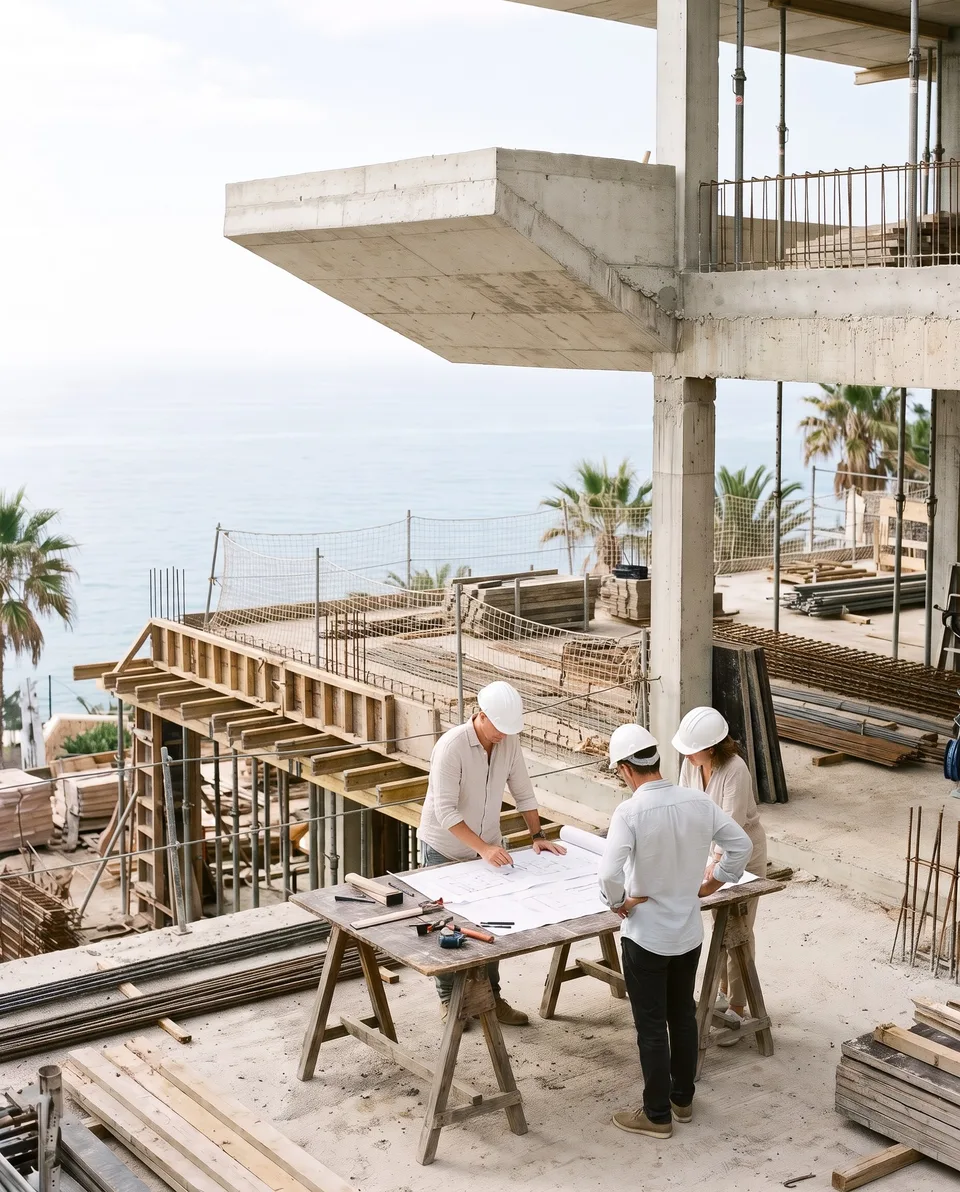
Three people in hard hats review architectural plans on a trestle table at a concrete building site with the sea visible behind.

Hugo Finch

On your side

Plot search and the plot study, the contracts, payment control, weekly reporting and legal completion. One contact from the first call to the keys, paid by one fixed fee agreed before you commit.

Casas Boutique Tenerife

Design and build partner

A Dutch design-and-build team based in La Orotava, working in Spain since 1998 with more than 200 completed projects. They design the house with you and build it. Visit their site

The architects

Sign and direct

A licensed architect signs the project and directs the works. A technical architect runs the site and certifies every payment. Both are named in your contract.

Independent inspector

Reports to you

A technical architect you hire directly checks the key milestones. We can recommend one. You pay them, and they report only to you.

Your lawyer

Your legal advice

For the plot purchase and the contracts. We work alongside your lawyer; we don't replace one.

Larger projects

Building bigger

Terraced white villas on a cliff edge, each with a private pool and sun loungers overlooking the sea.

A small development, an apartment building, a boutique hotel or an estate with several houses: the same rules, with a bigger study. Because we also sell and let homes, the project study includes what the finished units will sell or rent for, and to whom. That keeps the plan honest from the start.

  • FeasibilityWhat the land allows, and which authorities have a say.
  • MarketSale and rental values from our own data, by unit type.
  • Cost planBuild cost, fees, taxes and contingency, unit by unit.
  • PhasingLicences, build phases, sales timing and financing.

Project study from €7.500 + IGIC, credited in full if you go ahead with us. Project management at 2–3% of the build, agreed as one fixed fee.

Talk about a project →

Renovating instead?

Before. After.

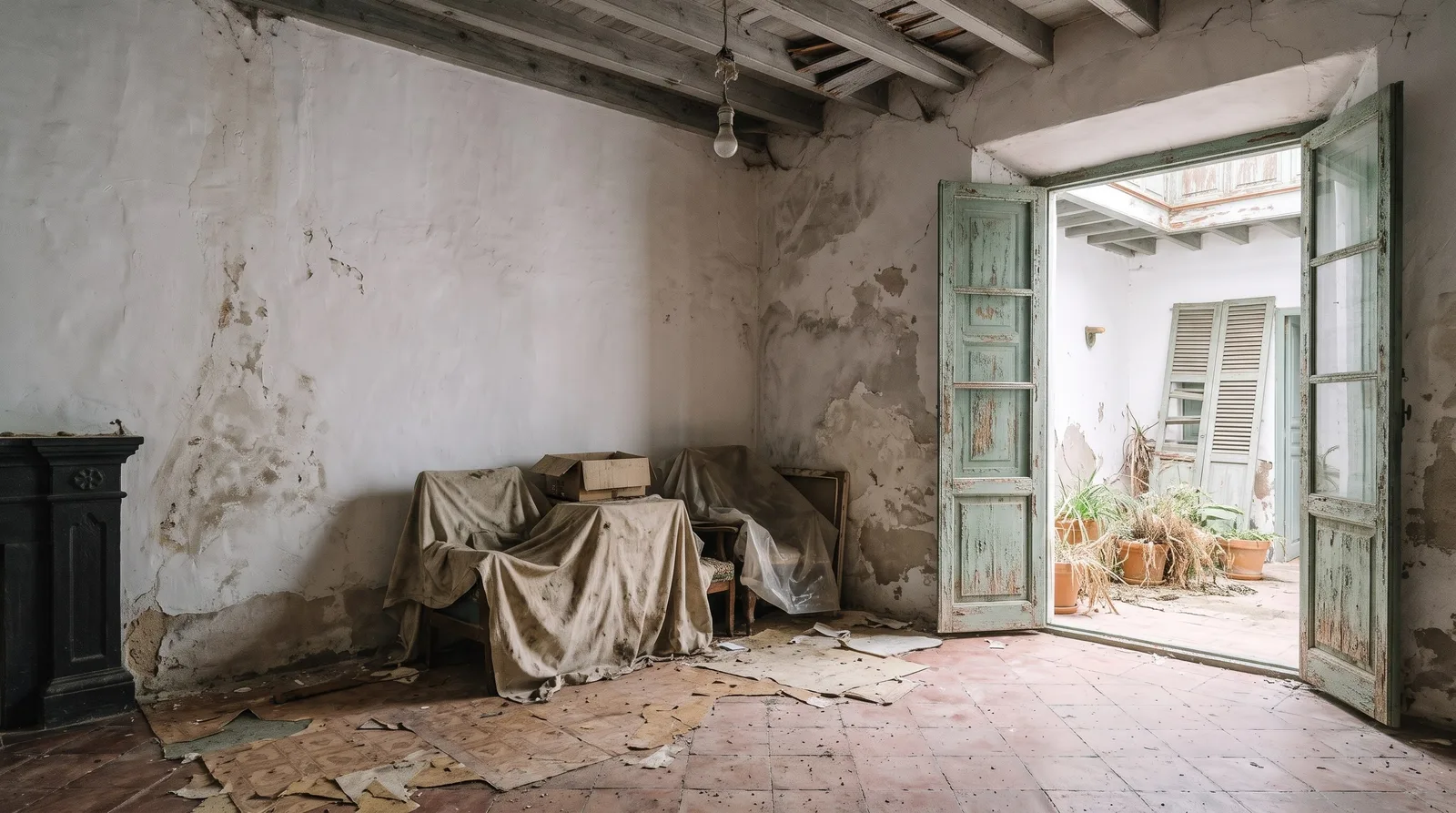
Many of the island's best houses already exist and need work. Renovation is Casas Boutique's speciality: we price it before you buy and manage it while you're abroad, with the same rules.

Empty room with peeling plaster walls, sheeted furniture, and pale green shutter doors opening onto a courtyard with potted plants.
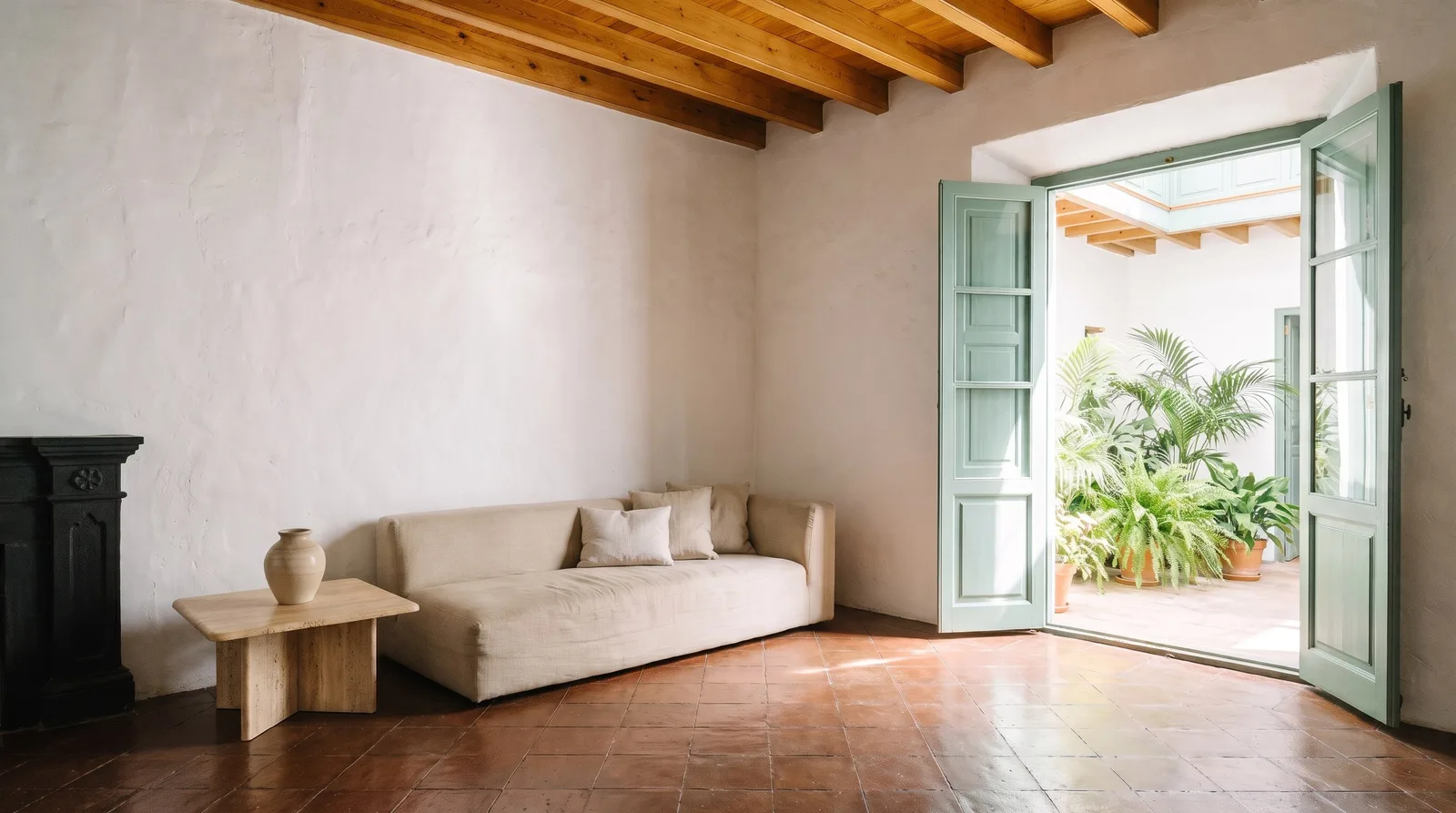
Sunlit living room with terracotta tiles, timber ceiling beams, a linen sofa, and open green shutters onto a palm-filled courtyard.
BeforeAfter
Buying a house that needs work? →

Questions

Good to know

Can I buy land and build as a foreigner?

Yes. You need a Spanish tax number (NIE) and a Spanish bank account; we help you arrange both. You don't need to live on the island: most signatures can be done with a power of attorney, and most clients visit two or three times during a build.

Can I build on rural land?

Usually not, for a new home. On rural land the Canary land law only allows houses in narrow cases, mostly tied to real farming, and the update now in parliament keeps that link. The plot study tells you before you buy.

How long does it really take?

Two to three years from the study to the keys is realistic. Design takes a few months and the build ten to eighteen. The licence is the big variable: three months in some towns, more than a year in others. You get a forecast for your town in the study.

Can I get a mortgage for a self-build?

Yes, a self-build mortgage. The bank wants the plot in your name and registered, the licence and the approved project. It releases the money in stages as the work is certified, and you pay interest only on what has been drawn. Expect to fund 30 to 40% yourself.

What if the builder goes bust?

Then you've only paid for work that exists and was certified, 5% of it is still held back, and the site is insured. Another builder can finish the house from the same project and specification. It costs time, not your savings.

What guarantees do I get on the house?

Spanish building law gives you one year on finishes, three years on defects that affect how the house works, and ten years on the structure. The decennial insurance covers the structure even if a company no longer exists.

What if the study says no?

Then it did its job. The report is yours to keep, and you haven't bought a plot you can't use. If you build with us within twelve months, on that plot or another one, the fee is credited in full.

What does Hugo Finch charge for the build?

One fixed fee, agreed in writing before you commit to building. For a single home it's about 5% of the construction price, with a minimum of €12.000, plus IGIC. For larger projects it's 2–3%. Because the amount is fixed, we earn nothing extra if the build gets more expensive. Any payment between us and the builder is written into your contract, and if you also buy the plot through us, we lower the build fee. The architect's fees for design and site direction, usually 8–12%, come on top; both are in the budget above.

Start here

Start with the plot

Tell us what you're planning. We reply within one working day with the next steps and the exact price of the study for your plot.

What are you planning?